Signed in as:
filler@godaddy.com

Born in Brooklyn, NY, the youngest of five children in a conservative Jewish family, Aaron Copland’s early exposure to music was somewhat limited, but after attending a concert by Polish composer-pianist Ignatz Paderewsy at the age of fifteen, he decided to become a composer.
Copland acquired a solid foundation, especially in the Germanic musical tradition, from Rubin Goldmark in New York. When he was twenty-five, he traveled to Paris to study with the famous composition teacher, Nadia Boulanger, intending to stay one year, but remaining with Boulanger for three years because he found her eclectic approach to composition consistent with his own broad musical taste.
Copland’s compositions in the early 1920s reflected the avante-gardeattitude that so many intellectuals of the time found appealing because they felt that the music they were creating needed to be accessible only to the most enlightened listeners, and that the masses would come to appreciate their efforts over time. Unfortunately (or maybe fortunately), many concert-goers refused to accept Copland’s dissonant musical language, and by the 1930s he started to simplify his style in order to reach a wider audience.
Copland’s best-known works are his three American ballets: Billy the Kid (1938), Rodeo (1942), and Appalachian Spring (1943). This period was arguably Copland’s most productive years, during which his creative output brought him worldwide fame and known among critics as the “Dean of American Composers.”
His Billy the Kid ballet is based on the life of the Old West outlaw, with a musical score that blends original music with American folk tunes into a distinctly American ballet. The story follows Billy’s violent youth, his life as a fugitive, a daring prison break, his brief romance with a Mexican sweetheart, and his eventual death at the hands of Sherriff Pat Garrett.
In the summer of 1939 Copland compiled an orchestral suite from the ballet in which he used about two-thirds of the original music. The six connected movements of the suite, which match the action sequence of the ballet, include:
One cowboy song conspicuously absent from the ballet is “Home on the Range.” When asked about it, Copland (not a fan of cowboy songs) replied, “I had to draw the line somewhere.”

A composer, pianist, conductor, singer, and music educator, Samuel Barber is one of the most celebrated composers of the twentieth century. During his lifetime, he received numerous awards and prizes, including the Rome Prize, two Pulitzer Prizes, the Henry Hadler Medal, and the Gold Medal for Music at the American Academy for Music at the American Academy and Institute of Arts and Letters.
Unlike many other composers of his day, Barber rejected the modernism that emanated from Europe in the 1920s, and preferred to set his own musical path. While his compositions were mostly vocal works, he also wrote at least one piece in nearly every musical genre and contributed mightily to the vast treasury of American music.
In 1936, while living in Europe, Barber wrote his String Quartet, a work in three movements, the second of which he arranged for string orchestra and later as a choral work.Since then, the Adagio for Strings has acquired a special place in moments of great reflection and grief. It was performed at the funerals of Franklin D. Roosevelt, Albert Einstein, and John F. Kennedy among many others, and has become the musical embodiment of national sorrow - a work whose impact is felt, but difficult to describe. Critics have expended thousands of words attempting to explain why the Adagio has such a profound effect on audiences everywhere, but it was the great Italian conductor, Arturo Toscanini, who led the NBC Symphony in its premiere on November 5, 1938, who intuitively understood the piece and explained it in three words - semplice e bella.
Simple and beautiful
On September, 2019, Union Cycliste Internationale (UCI),the international governing body of cycling, announced the 2024 UCI BMX World Championship would be coming to the Rock Hill BMX Supercross Track in May 2024, just ahead of the Summer Olympic Grames in Paris. The UCI World Championships are held annually to crown a BMX Cycling World Champion. Previous host sites include Baku, Azerbaijan (2018); Zolder, Belgium (2019; Houston, TX (2020); Papendal, Netherlands (2021); Nantes, France (2022); and Glasgow, Great Britain (2023). In recognition of the event, the Rock Hill Symphony commissioned a– Champions Come to Rock Hill - to open their 2024-2025 concert season, choosing Charlotte composer Gary Fry to undertake the commission.
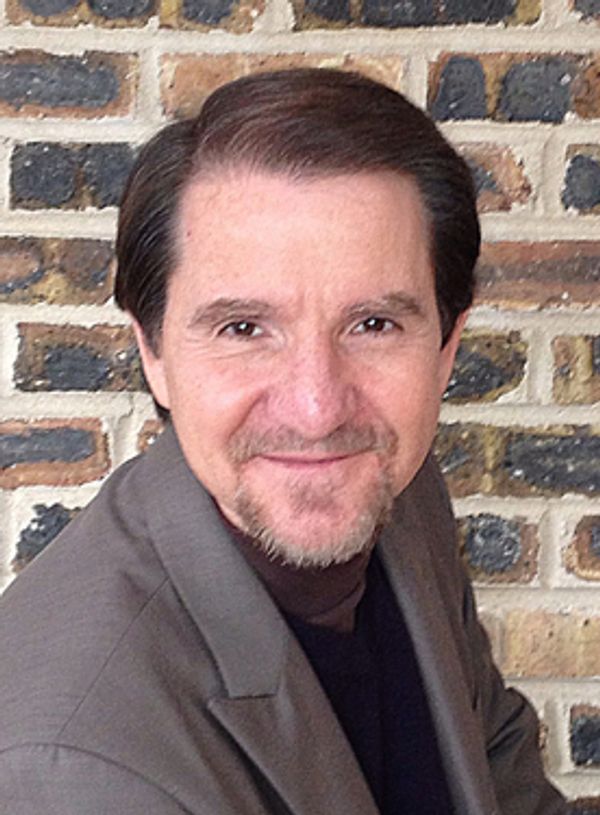
Gary Fry is an Emmy-winning composer, arranger, producer, conductor and music educator with a unique combination of symphonic skills and commercial experience that has made him an in-demand music writer for organizations looking for the highest-quality compositions and arrangements that appeal to a broad audience. Gary has written music for recordings, films, commercials, and live performances and is currently arranger/composer for the Charlotte Symphony’s Holiday Pops programs. One of the nation’s foremost commercial music producers, Gary has written and produced over 2500 nationally broadcast radio and television commercials for companies such as McDonald’s, Sears, United Airlines, and hundreds of other advertisers. Recently, he orchestrated and conducted music for the PBS nature special To the Ends of the Earth.
Gary Fry specially crafted Champions Come to Rock Hillto recognize the significance of hosting the UCI World Championship and to celebrate world class athletics and sportsmanship as well as the culture and southern hospitality of Rock Hill, South Carolina. The UCI BMX Racing World Championships took place May 12-18, 2024 at the Rock Hill BMX Supercross Track, with more than 45 countries represented by an estimated 3500 world-class amateur and elite riders.
Gary’s exciting overture, Champions Come to Rock Hill, originally scored for brass and percussion ensemble, will be performed on tonight’s concert by the full Rock Hill Symphony Orchestra.

Originally from Raleigh, NC, Jeremy Lamb received his Bachelor’s degree from Peabody Conservatory, where he studied with Alan Stepansky. Following graduation, he performed with several orchestras at home and abroad, including the Pittsburg Symphony, Singapore Symphony, Sapphoro Symphony (Japan), New Haven Symphony, Northeast Pennsylvania Philharmonic, and in the Broadway production of Aladdin. He also performed with festival orchestras, including Tanglewood, Aspen, Pacific, Brevard, Bowdoin, Oaxaca (Mexico), Jeunesses Musicales, and Domaine Forget(France).
A versatile young musician, Jeremy joined the Charlotte Symphony in 2017 and runs his own bow repair business, Lamb’s Magical Bow Rehairs. Much of his remaining time is spent composing and arranging music for orchestra and for his group, Lamb Jam Quartet for two cellos, bass and flute.
Tonight’s performance of Victorious is the world premiere of a new work for flute and orchestra by Jeremy Lamb, featuring soloist Victor Wang, principal flutist with the Charlotte Symphony.